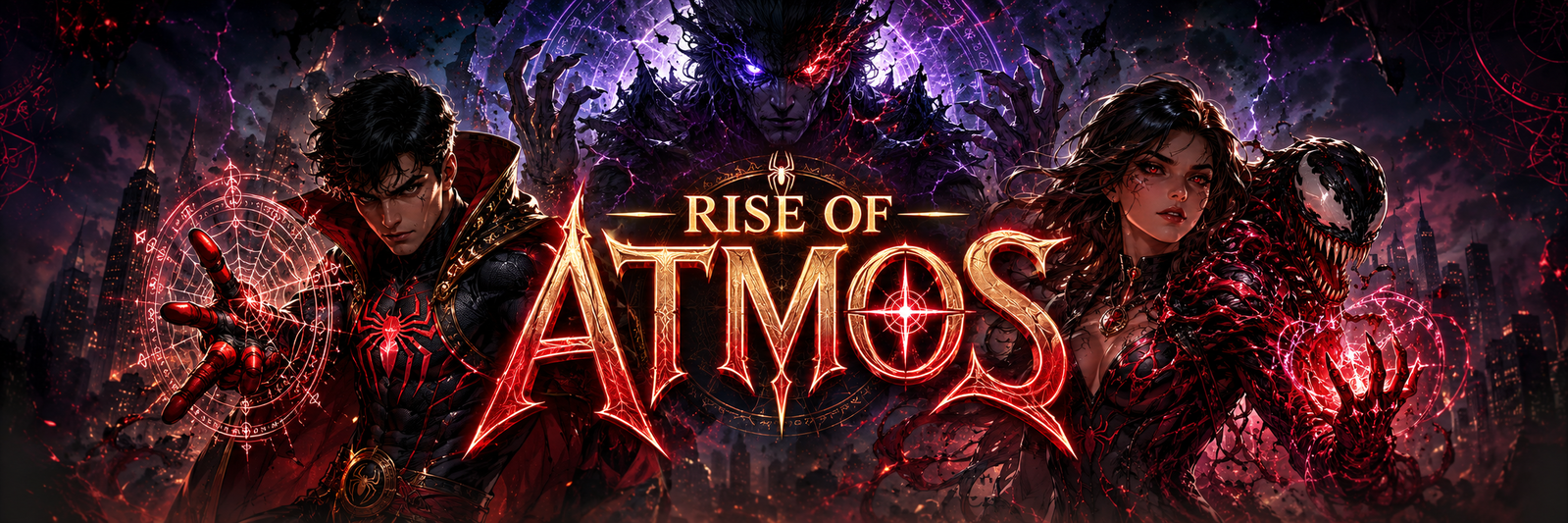
Marvel: Rise of Atmos
Marvel: Rise of Atmos is a superhero RPG about inheritance, identity, and what happens when a child survives something no one was meant to survive. Your story begins inside a hidden cult devoted to Atmos, an enigmatic figure tied to sorcery, mutant genetics, stolen technology, cosmic forces, and plans no one fully understands. You were born into that system. You were meant to be used by it. Instead, a Marvel hero reaches you during the final ritual. During character creation, you choose that Rescuer Legacy. Spider-Man, Wolverine, Hulk, Thor, Doctor Strange, Scarlet Witch, Captain Marvel, Ghost Rider, Venom, Storm, and many others can be the hero who makes the final choice to save you. The ritual collapses into Feedback. Your Rescuer dies. You live. What remains inside you is not resurrection, possession, cloning, or replacement. The Feedback preserves a bounded functional pattern of the fallen hero: powers, reflexes, instincts, fragments of memory, emotional residue, combat habits, and unfinished bonds. You inherit the function of a hero—not the right to become that hero. Your second major choice is your native Mutation. It changes how the inherited power behaves. Telepathy, Magnetism, Technopathy, Feral Mutation, Photokinesis, Symbiotic Biology, and dozens of others can create radically different successors from the same Rescuer. Three progression skills define that struggle: Memory Integration separates inherited experience from your own memories and emotions. Mutation Control governs the power that was always yours. Power Integration governs how Legacy and Mutation cooperate, interfere, or evolve into something new. You also choose how you fight and train, your Feedback stability, mantle attitude, limitations, specialties, civilian life, public identity, personality, appearance, costume, and more. Then you choose who raised you. Your Found Family determines your home, mentors, relationships, supporting cast, training culture, and first major Marvel saga. Grow up with the Stark family, Xavier’s school, Logan, the Fantastic Four, Wakanda, Wong and the Sanctum, the Avengers, the Defenders, the Parker Family, Asgard, the Guardians of the Galaxy, the Midnight Suns, or Wade Wilson’s School for Horribly Emotionally Damaged Kids. These are not strangers waiting to meet you at Turn 1. They may have raised you for years. Guardians can already feel like parents. Teammates can feel like siblings. Friendships, rivalries, and established romances can begin with real history behind them. Each Found Family opens a different precursor campaign rooted in that corner of Marvel: Extremis, Apocalypse, the Negative Zone, Killmonger, the Dark Dimension, Ultron, Mister Negative, Ragnarok, Ego, Lilith and Chthon, and more. Wade Wilson’s School launches the first true multiverse route: a Deadpool-and-you adventure involving the TVA, Paradox, the Void, Cassandra Nova, discarded realities, terrible plans, worse jokes, and the player occupying the story’s partner role regardless of powers. These sagas are recognizable without being reenactments. The threat and thematic spine remain intact, but casualties, alliances, betrayals, romances, team composition, moral decisions, public consequences, and even the form of victory can change. The world is designed to breathe. Major arcs are separated by enforced downtime where the narrator stops trying to escalate everything. Go home. Date. Train. Work. Study. Patrol. Cook dinner. Repair gear. Visit friends. Argue with family. Attend a memorial. Deal with a minor villain. Take a trip. Spend an evening doing something stupid with Deadpool. Breathing periods can be ordinary, extended, or recovery-focused. Some emphasize everyday life. Others give relationships and civilian identity more room. Recovery periods focus on injury, grief, fear, caregiving, reconciliation, and emotional fallout without forcing every scene to be miserable. When the minimum downtime has passed, the main story still does not resume until you decide you are ready. Hero Mode pushes this freedom further, letting you simply live in the Marvel universe between major stories without being dragged toward a compulsory crisis. Atmos remains somewhere behind the oldest questions in your life, but the campaign does not give you all of his answers at the beginning. What was the ritual really meant to accomplish? Why were you created? What happened to the other children? Why does the Feedback behave the way it does? And why do pieces of your past keep surfacing where they should not? Those answers emerge through play. Rise of Atmos is not about replacing the hero who died for you. It is about growing into someone neither your Rescuer nor the people who created you could have predicted. Your powers may have begun with someone else. Your life does not.