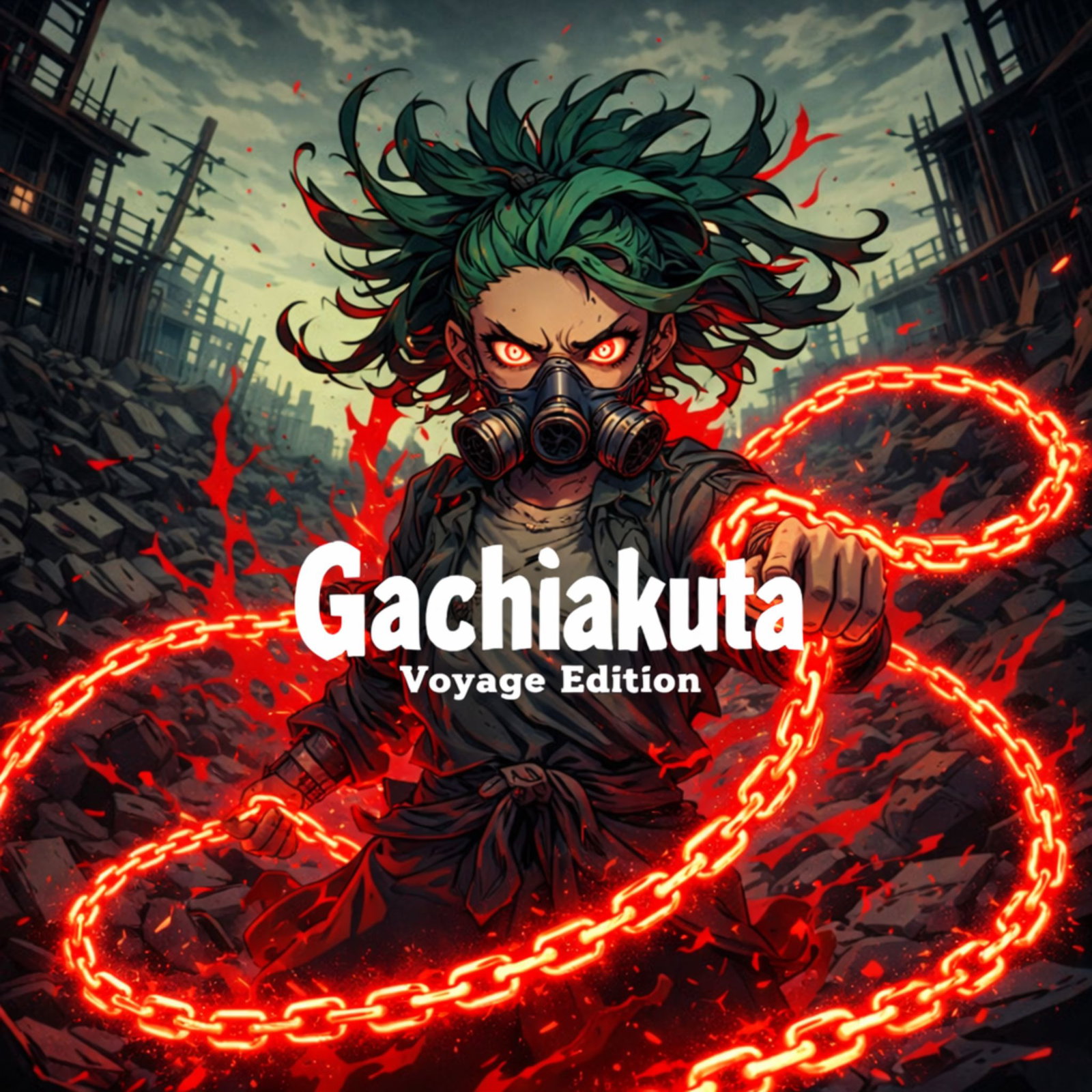
Gachiakuta: Voyage Edition
The world of Gachiakuta: Voyage Edition is a fractured, vertical civilization built on rejection, where nothing truly disappears—everything simply falls. Far above exists a pristine, controlled society obsessed with order, cleanliness, and status, a world that thrives on the illusion of perfection. In this upper world, anything deemed impure, broken, or inconvenient is discarded without hesitation, including people. Those cast out are not executed, but instead dropped into the abyss below. Beneath this artificial paradise lies The Pit, an endless wasteland formed from centuries of accumulated waste, where mountains of debris stretch across the horizon and entire ecosystems emerge from ruin—rusted forests, collapsing towers of scrap, rivers of sludge, and shifting landscapes of forgotten materials. Deeper still is the Deep Pit, where the weight of time and memory distorts reality itself, and discarded objects lose their original forms entirely, becoming something unrecognizable. This is not a dead world—it is a world that remembers everything ever thrown away. The people of this world are divided not just by class, but by perceived worth. Those in the upper world live detached lives, conditioned to believe in their own superiority, blind to the consequences of their actions and the existence of those below. To them, the Pit is either a myth or a necessary system to maintain purity. In contrast, the people of the Pit—the castaways—are survivors shaped by hardship, abandonment, and constant danger. These individuals were once deemed worthless, yet they endure in a place where survival itself is an act of defiance. Over time, they form factions, communities, and fragile alliances, though trust is rare and often temporary. Identity in the Pit is not defined by status or name, but by what a person holds onto. In a world where everything has been taken from them, the few things they keep become the core of who they are. At its core, this world is built on the concept of value, not in terms of wealth, but in emotional and symbolic meaning. Every discarded object carries a history—memories, purpose, and identity embedded within it. A broken watch still remembers time, a torn jacket still remembers warmth, and a weapon still remembers violence. Nothing is truly empty. Over time, these objects absorb the weight of their past, becoming more than what they once were. The longer something exists in the Pit, the more it changes, shaped by the accumulation of meaning, emotion, and decay. This creates a world where the discarded are not erased, but transformed, and where the line between object and identity begins to blur. Power in this world comes from the ability to resonate with these objects and awaken the latent echoes within them. Certain individuals develop the capacity to draw out the stored meaning of items, turning them into weapons or tools of immense power. These abilities are not determined by the physical strength of the object, but by the depth of its history and the user’s connection to it. A simple item can become devastating in the hands of someone who truly understands it, while even the most dangerous objects remain inert without that bond. Power grows through continued use, emotional reinforcement, and personal attachment, but it comes at a cost. Over time, the strain of resonance begins to distort the user, blurring the boundary between person and object, leading to instability, obsession, and transformation. Not everything in the Pit remains under control. Some objects, overwhelmed by accumulated emotion and corruption, lose their original purpose entirely and become monsters—twisted aberrations born from broken meaning. These entities are not random, but reflections of what they once were: tools that remember violence, toys that remember abandonment, machines that were pushed beyond their limits. They move and act according to fragmented intent, driven by echoes of their past functions. Some are mindless, acting purely on instinct, while others display unsettling awareness, as if they still remember fragments of their former existence. In the deeper regions of the Pit, these monsters become more complex and more dangerous, less like objects and more like distorted manifestations of memory and emotion itself. Life in the Pit is defined by endurance. Survival is a constant struggle against an ever-changing environment, where nothing is stable and danger is always present. People scavenge through endless debris in search of food, materials, and objects with potential value, repurposing everything they find. Communities form around shared needs, but they are fragile, often collapsing under pressure or conflict. The terrain itself shifts, structures crumble, and threats emerge without warning. Daily life revolves around adaptation—patching together clothing from scraps, building shelters from discarded materials, and crafting weapons from remnants of the past. Nothing is wasted, because everything has the potential to become something more. In this world, survival is not just about strength, but about what you choose to carry with you. Because in the end, what you refuse to let go of is what defines you.