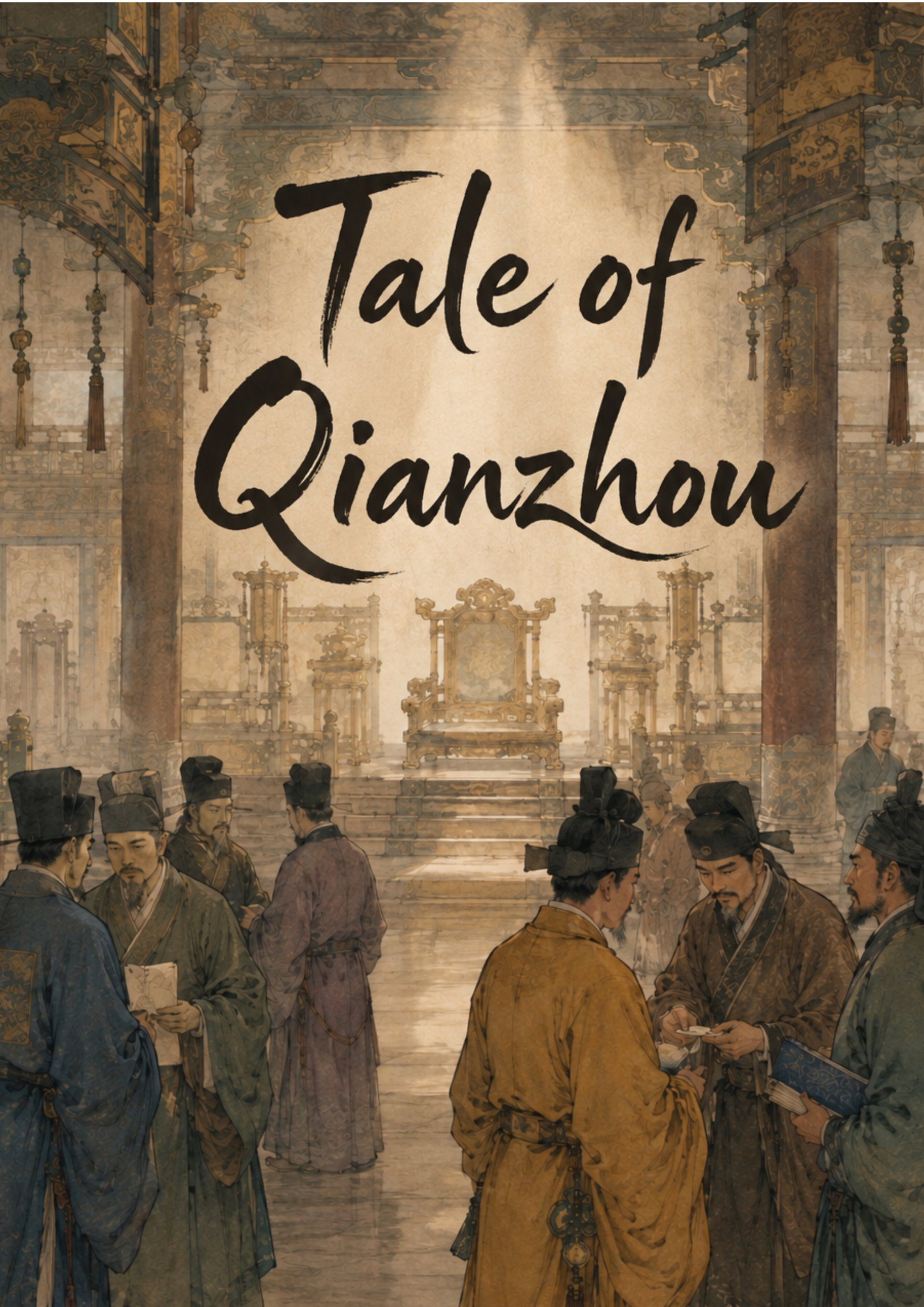
Tale of Qianzhou
You're not the chosen one. Nobody in Qianzhou is waiting for you to save them, and no throne is waiting for you to inherit it. What you get instead: a realm where every faction is already scheming without you, every NPC remembers exactly what you did and why, and every choice — a favor granted, a debt called in, a marriage arranged, a blade finally drawn — actually changes who holds leverage over whom. Play the merchant who out-maneuvers a rival house through debt and reputation instead of swords. Play the servant who quietly becomes the most dangerous person in the room. Play the general who wins a war through patience instead of a single decisive battle. Or build something from nothing and watch the realm actually react to how hard you push. No magic, no monsters, no wuxia superhuman feats — just real people with real training, real fear, and real limits, in a Song-dynasty-inspired world where politics is the real battlefield and violence is a last resort, not the point of the game. Combat exists, and it costs something when it happens. Everything else — alliances, secrets, reputations, old debts — is where the actual story lives. Choose how your story moves: a quiet life built on relationships and routine, a patient political game of leverage and standing, or a driven climb built entirely on your own ambition — three genuinely different lenses over the same living world, not a difficulty slider with a new coat of paint. And the people you meet won't forget you. NPCs act on their own wants, their own histories, their own limits — not on convenient plot cues. Some will hold back from hurting you even under direct orders, because of who you are to them. Most won't care about you at all, until you give them a reason to. If you've ever wanted a world that keeps living whether or not you're the main character in it — this is that world.