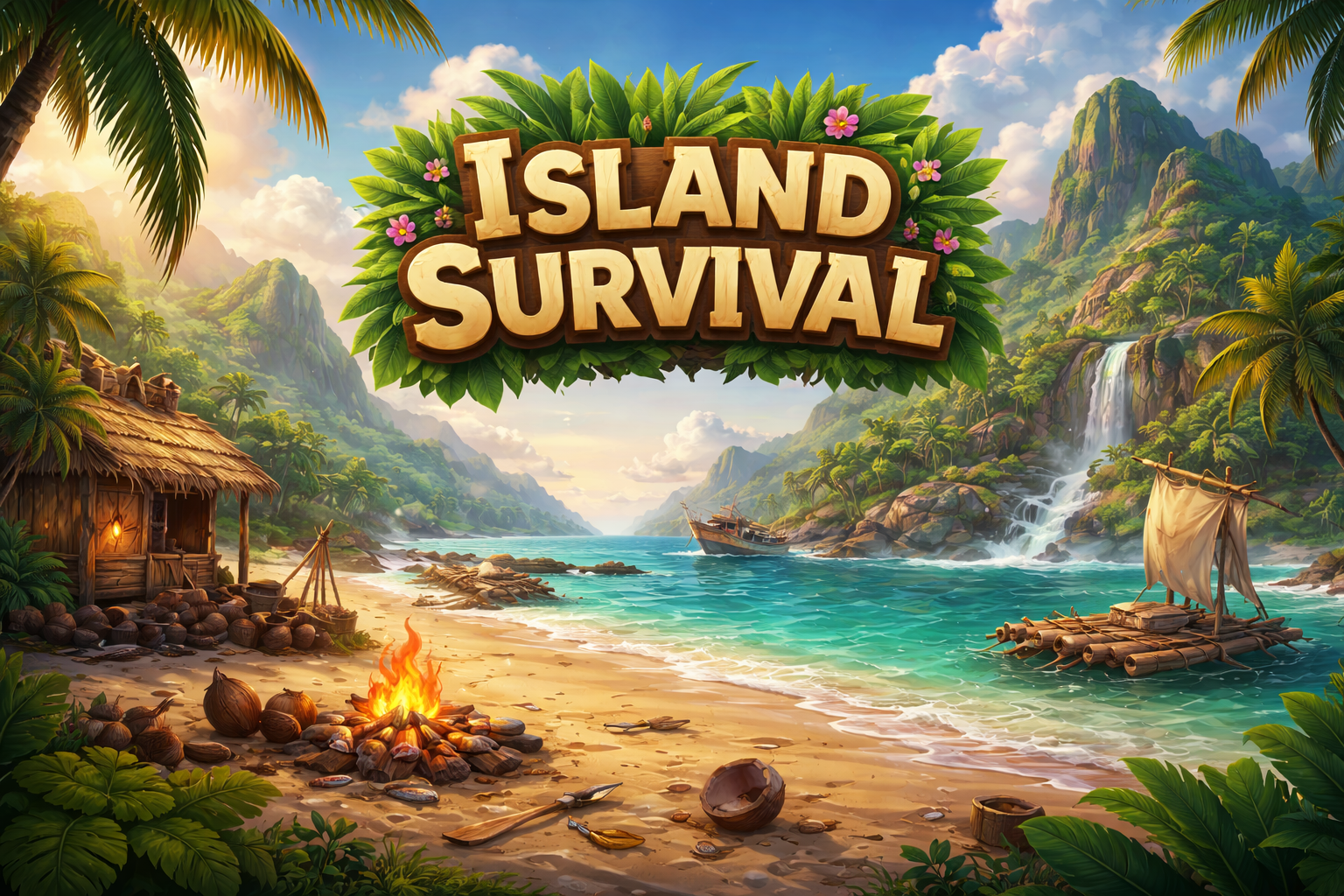
Island Survival
Far from any documented flight path, a commercial aircraft goes down over the Pacific. What follows is not a miracle rescue, but impact—fire, wreckage, and silence. Survivors emerge scattered along beaches, tangled in jungle growth, or trapped near the broken fuselage itself. Injuries vary. Supplies are limited. Communication is gone. The island is vast and uncharted. Dense rainforest blankets volcanic stone, fed by freshwater streams flowing from a mist-covered caldera at its center. Wildlife thrives here—birds, wild pigs, and other elusive mammals—alongside fruit-bearing trees, edible roots, and rich marine life. Survival is possible, but only through effort, learning, and risk. The climate is tropical and unpredictable. Warm days and sudden downpours give way to violent storms capable of reshaping the terrain overnight. Shelter must be earned. Tools must be crafted. Food must be found, hunted, or harvested. The wreckage offers a short-lived advantage before exposure, injury, and time take their toll. Despite modern technology, the island does not exist on any chart. Its absence is attributed to extreme remoteness, magnetic interference, or atmospheric distortion that causes sensor drift. Whatever the explanation, civilization has passed it by. The only evidence of prior human presence comes from ancient Polynesian artifacts—weathered carvings, stone tools, and the remnants of temporary settlements long reclaimed by the jungle. This world supports many beginnings: different crash locations, injuries, companions, and starting resources. No two survivors endure the island the same way. Rescue is uncertain. Time stretches. And as days turn into weeks, the island reveals itself not merely as a place to survive—but as a force that tests resolve, adaptability, and the will to endure. You are not guaranteed escape. You are only guaranteed the struggle.