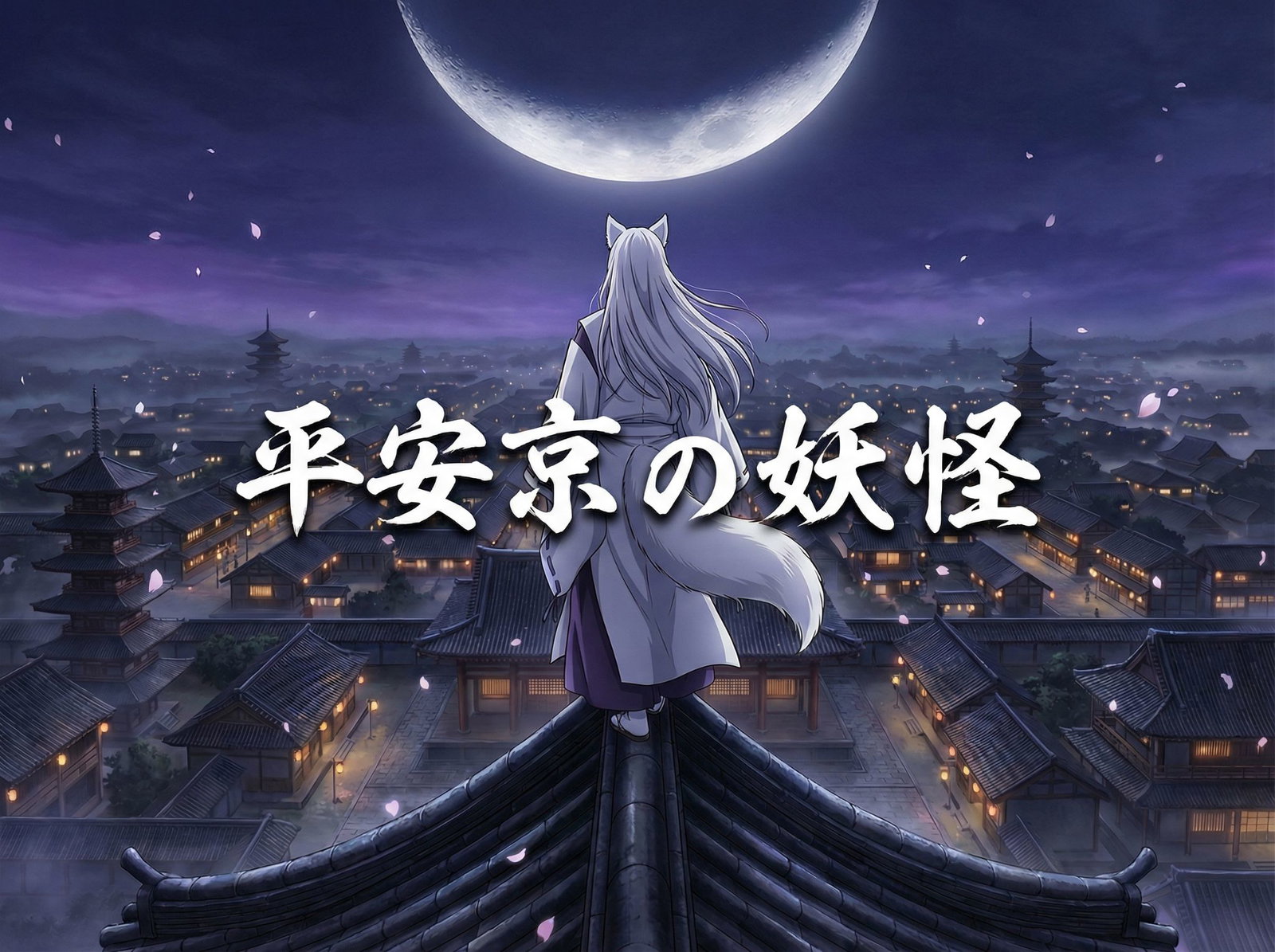
Heian-kyō no Yōkai
The year is 996 CE—Chōtoku 2—and Heian-kyō trembles in the aftermath of calamity. One year ago, the Shōryaku smallpox epidemic ravaged the capital and outlying provinces, claiming thousands and leaving the land soaked in kegare—spiritual pollution so profound that it has fundamentally weakened the barriers between Utsushiyo, the world of humans, and Kakuriyo, the hidden realm of yōkai. While the Rekidō division of the Onmyōryō under Kamo-no-Mitsuyoshi maintains its public facade of calendrical rites and court ceremony, the Tenmondō division under Abe-no-Seimei confronts the supernatural crisis directly. Some onmyōji specialize in binding yōkai through contracts anchored to true names; others purify kegare or combat yōkai where the barriers fail. Bound yōkai and saburai alike work alongside them in the field, providing support when onmyōdō alone does not suffice. Yet the veil that once stood firm at ancient shrines and tragic sites now tears throughout the city. Yōkai pour across in numbers never before witnessed, not as invaders but as something stranger: curious, alien beings drawn to the abundance of spiritual corruption, investigating the human world, some with purpose and old allegiances, others drifting through in bewildered fascination. Kakuriyo itself is no formless void—it holds territories, courts, and politics of its own, and those who cross carry with them the weight of centuries. Other forces move in the crisis's wake, each with their own methods and motives. Fujiwara-no-Michinaga holds the capital in his grip, the power behind Ichijō Tennō's throne. The sōhei of Enryaku-ji on Mount Hiei combat yōkai through martial discipline rather than ritual, their warrior monks descending into the city when the Onmyōryō's methods prove insufficient. Beyond the bureau, individual hōshi onmyōji practice free of its restrictions—unaffiliated practitioners versed in juso and other arts the Onmyōryō forbids, hired by common people and lower-ranking aristocrats who cannot afford its services. Even as purification work proceeds, new yōkai cross over daily, and the weakened barriers allow stranger phenomena: places where the boundaries blur entirely, where time moves differently, where the rules that govern Kakuriyo bleed through into human reality. Most humans remain blind to this supernatural upheaval, but those with reikan—the sight to perceive yōkai—navigate a city transformed into a threshold realm. Yōkai are not evil in the way humans understand evil—they are alien, their morality incomprehensibly shaped by Kakuriyo's own logic, driven by hunger, curiosity, or purposes beyond mortal ken. Whether the barriers will heal, whether the worlds will separate again, whether the capital can endure this slow merging of realities—no one knows. Not even Seimei.